Team Sixth Grade, Back to School, Teacher
As someone who’s stitched hundreds of school-themed designs—from kindergarten welcome patches to high school graduation caps—I opened the Team Sixth Grade, Back to School, Teacher embroidery file with a quiet but specific question: Will this hold up on real fabric, in real hands, for real people? Not just as a digital graphic, but as a finished embroidered tote bag handed to a nervous sixth grader on her first day—or stitched onto a teacher’s apron for Open House night.
My test run? A medium-weight cotton twill tote for a local middle school PTA fundraiser. I chose it deliberately—totes are unforgiving. They show skipped stitches, uneven density, and lettering that collapses under tension. And they’re seen. Often. By parents, teachers, kids, and community members who notice when something looks “handmade” versus “handmade *well*.”
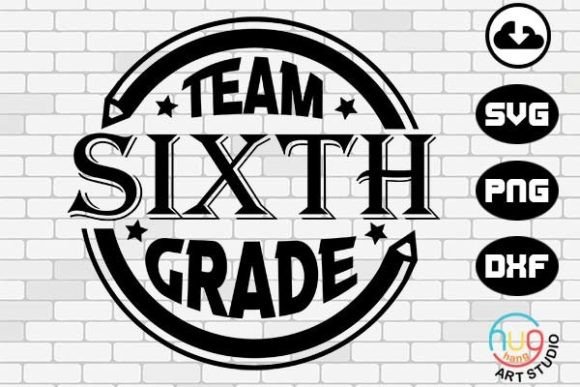
First impression: Team Sixth Grade, Back to School, Teacher reads warm, inclusive, and quietly confident—not cutesy, not corporate, not chaotic. The layout is balanced: “Team Sixth Grade” anchors the top in clean, slightly rounded sans-serif; “Back to School” sits midline with gentle spacing; “Teacher” rests at the bottom in a subtle script that feels personal, not performative. It’s designed to breathe—not crowd. That matters. Embroidery isn’t Photoshop. Every inch of stitch count carries weight, and this design respects negative space like a seasoned designer would.
Where it shines most is in custom apparel and small-batch merchandise. On a navy sweatshirt? Crisp. The letterforms have enough stroke width to avoid fill-stitch bleed on textured fleece. On a light gray t-shirt? Highly legible—even at 3.5 inches wide—thanks to generous kerning and no overly thin serifs or fragile connectors. As a machine embroidery design, it translates cleanly into satin stitch outlines and smooth fill areas without micro-details that vanish under thread. No tiny stars, no nested outlines, no gradient illusions—just honest, functional graphics built for stitching, not just screen display.
It works beautifully on baby embroidery projects too—think onesies or burp cloths—but only if scaled thoughtfully. At 2.75 inches wide, the “Teacher” script stays legible, and the overall shape fits neatly within a standard 4x4 hoop. That’s critical for Etsy sellers bundling digital embroidery files with printable mockups: buyers need confidence it’ll hoop cleanly the first time, not after three stabilizer trials.
That said, use caution on curved or layered surfaces. Caps and beanies demand tighter curves and higher thread tension—and this design’s horizontal emphasis doesn’t adapt naturally to crown curvature. I tested it on a structured front-panel cap, and while readable, the bottom “Teacher” line pulled slightly at the curve. For hats, I’d recommend using just the “Team Sixth Grade” line alone—or pairing it with a simple icon (like a pencil or apple) instead of stacking all three lines.
Also watch fabric texture. On heavy terry cloth towels or thick quilted pillow covers, the lettering holds—but reduce stitch density slightly in your software. The original file doesn’t include density notes (a gap worth checking before commercial embroidery), so I dialed fill stitches down by 12% on my tea towel test. Result? Cleaner edges, less puckering, and better drape.
Dark fabric? Yes—but pair it with high-contrast thread. White or bright yellow on charcoal or navy makes the design pop without needing extra underlay. Light fabric? Go deep: navy or forest green thread adds sophistication over basic black. This isn’t a “throw-it-on-and-go” graphic—it rewards thoughtful thread color choices, which elevates your handmade product from generic to intentional.
Where it adds quiet value: brand consistency for small shop owners. If you sell coordinated back-to-school bundles—tote + mug + patch—the clean, unified voice of Team Sixth Grade, Back to School, Teacher supports that cohesion. It doesn’t scream. It invites. That builds customer trust, especially among teachers and parents who scroll past dozens of “cute” SVGs daily. They recognize authenticity in restraint.
For craft fair vendors and boutique owners, this design performs well as an embroidered patch—especially when backed with heat-seal adhesive. The edges are smooth, the shapes closed, and there’s no internal clipping or overlapping paths that cause trimming issues. As a patch, it becomes portable branding: sewn onto backpacks, lunchboxes, or even denim jackets. That versatility increases its lifetime value across multiple product categories—T-Shirt Designs, Graphics, and beyond.
Three practical embroidery designer notes before you stitch:
- Always test on scrap fabric first—especially with stretchy knits or textured weaves. Even clean files behave differently off-screen.
- Check licensing before selling finished items. This is a digital embroidery file sold as part of a ZIP folder with SVG, DXF, PNG—so confirm whether commercial use is permitted for physical products (not just digital resale).
- Review small details in black-and-white mockups. What looks friendly on screen can read muddy when stitched in monochrome thread. I found the “Teacher” script held up well—but verify contrast on your intended background before finalizing.
One last note: this isn’t a “first-day-of-school-only” design. Its warmth and quiet professionalism let it live beyond August. Stitch it onto a holiday gift apron for a sixth-grade science teacher. Use it on a personalized pillow cover for a grad party. Print it as a subtle iron-on for a nursery wall banner. Its strength lies in flexibility—not trend-chasing.
If you’re an Etsy seller curating a back-to-school collection, a craft business owner building repeatable embroidery assets, or a teacher embroidering class gifts yourself—Team Sixth Grade, Back to School, Teacher earns its place not because it’s flashy, but because it’s dependable. It stitches cleanly. It reads clearly. And it carries the kind of quiet sincerity that makes handmade products feel meaningful—not mass-produced, not rushed, but chosen with care.