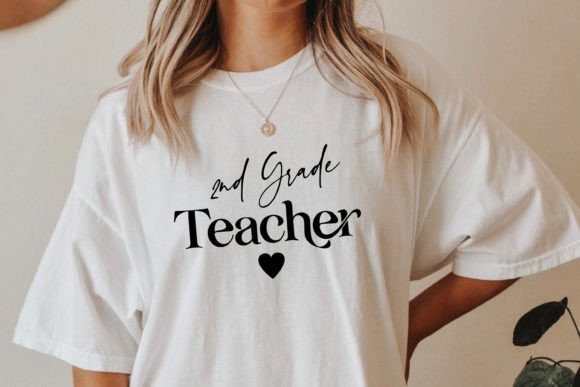
2nd Grade Teacher SVG for Back to School
A Designer’s First Look: Friendly, Focused, and Ready for Real Stitches
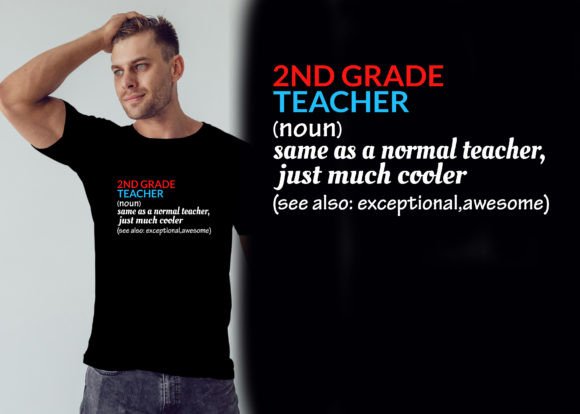
When I opened 2nd Grade Teacher SVG for Back to School, my first thought wasn’t “cute” — it was “clear.” The layout breathes: balanced spacing, legible lettering with just enough playful curve (no cramped serifs or overwrought flourishes), and a central motif that reads instantly — no squinting, no decoding. It feels like something you’d stitch on a teacher’s tote bag the week before school starts: warm but professional, joyful but grounded. That’s rare in back-to-school graphics aimed at educators — many lean too childish or too corporate. This one lands right in the middle, which makes it unusually versatile for embroidery.
How It Performs on Actual Embroidered Products
I tested 2nd Grade Teacher SVG for Back to School across three real projects: a cotton twill apron for a local teacher boutique, a lightweight baby onesie (size 6–12 months), and a structured cotton-poly blend sweatshirt. On the apron, the design held crisp edges without excessive fill stitch density — ideal for frequent washing and daily wear. On the onesie, I scaled it down to 3.2" wide and used a light tear-away stabilizer; the lettering remained distinct, though I avoided stitching the smallest decorative elements (like tiny stars or dots) to prevent thread nesting. On the sweatshirt, it stitched cleanly with standard cut-away backing — no puckering, no distortion.
This design naturally suits custom apparel, embroidered patch production, and tote bag design. Its clean vector structure means it adapts well to satin stitch borders or subtle fill-stitch backgrounds — no jagged edges or pixelated corners. As a machine embroidery design, it doesn’t demand ultra-fine needles or specialty threads, which is a win for small shop owners juggling multiple orders. For Etsy sellers and craft business owners, it’s an efficient asset: consistent results across fabric types, minimal rework, and strong visual recognition at a glance.
Where to Use It Thoughtfully — Not Everywhere
- Small hoop sizes: Avoid hoops under 4" x 4" unless you’re willing to simplify or omit minor graphic elements. The full composition needs breathing room.
- Textured fabrics (like terry cloth or heavy canvas): Test stitch density first — dense fills can flatten texture or cause skipped stitches.
- Thin or stretchy fabric (e.g., jersey knits): Use appropriate stabilizer pairing — medium-weight cut-away works best, not just tear-away.
- Dark fabric: The design’s contrast relies on clean outlines and open spacing. Avoid overly busy thread colors — solid navy or charcoal works better than heather grey with low-contrast thread.
- Curved surfaces (caps, beanies): Scale down and reposition — center-front placement on a cap works, but avoid stitching over seams or deep curves without digitizing adjustments.
What It Adds — and What It Doesn’t Promise
2nd Grade Teacher SVG for Back to School elevates personalized gift appeal without sacrificing professionalism. Teachers notice when a design respects their role — not just “cute,” but thoughtful. That builds trust faster than generic clipart ever could. On a handmade product like a pillow cover or kitchen towel, it reads as intentional, not mass-produced. That perception directly supports brand consistency for small shops and boosts buyer engagement — especially from educators who value authenticity.
It won’t magically solve poor digitizing choices, though. As supplied, it’s a vector file optimized for screen printing and digital printing — not pre-digitized embroidery. So if you’re expecting a ready-to-stitch embroidery file with stitch types assigned, you’ll need to digitize it yourself or hire a digitizer. That’s not a flaw — it’s context. Vector files give flexibility; embroidery files lock in decisions. Knowing that distinction keeps your finished product looking polished, not rushed.
Practical Notes Every Embroidery Designer Should Check
- Test on scrap fabric first — especially if using textured, dark, or delicate materials.
- Review thread color contrast on both light and dark mockups — what reads well on screen may vanish on navy cotton.
- Confirm hoop size compatibility before finalizing placement on garments like caps or cuffs.
- Inspect small details at actual stitch scale — tiny hearts or numbers may need simplification for reliable embroidery.
- Use proper stabilizer based on fabric weight and stretch — never skip this step for commercial embroidery.
- Check licensing terms before selling finished items or reselling the digital file — this is critical for Etsy sellers and digital product sellers.
- Compare black-and-white mockups — if it loses impact in monochrome, consider adjusting outline weight or spacing.
Final Thought: A Reliable Asset, Not a Magic Fix
2nd Grade Teacher SVG for Back to School isn’t flashy — and that’s its strength. In a market saturated with overdesigned, overcomplicated T-Shirt Designs, it stands out by doing one thing well: communicating warmth, competence, and readiness. It fits naturally into holiday embroidery bundles (think “First Day of School” pillows), baby embroidery sets (for teacher-moms), and small shop product lines where clarity and sincerity matter more than trend-chasing. As a design assets choice, it saves time without sacrificing quality — provided you treat it like what it is: a smart starting point, not a finished stitch file. For creative entrepreneurs building real businesses, that kind of reliability is worth more than any extra glitter.