2nd Grade Player1 Start, Back to School
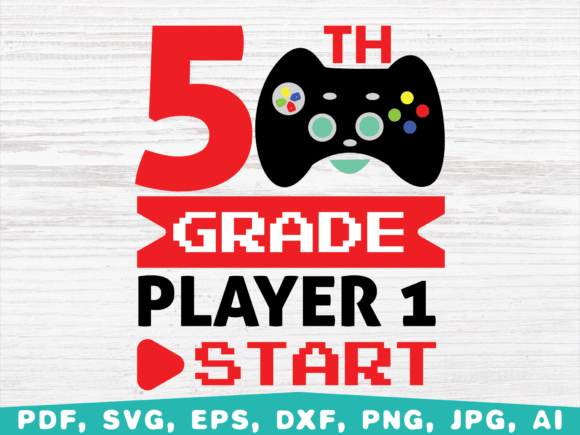
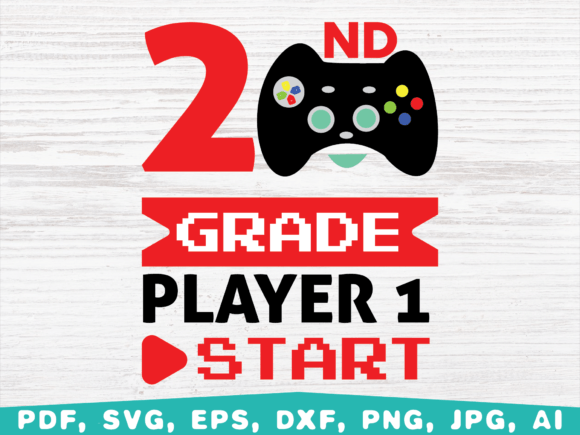
As a designer who’s stitched hundreds of school-themed embroidery files—from kindergarten keepsakes to middle-school spirit wear—I opened 2nd Grade Player1 Start, Back to School expecting something cheerful but safe. What I found was sharper than expected: a clean, playful typographic treatment with subtle gaming-inspired flair—think pixel-adjacent spacing, a light “start” icon motif, and just enough whimsy to feel personal without tipping into clutter.
Last week, I used it on a custom embroidered cotton tote for a local teacher’s aide who wanted something upbeat but not babyish for her second-grade classroom supply bag. The design landed perfectly: legible at 3.5 inches wide, friendly but grounded, and instantly recognizable as “school-ready”—not generic back-to-school clipart. That’s the first real win for 2nd Grade Player1 Start, Back to School: it reads clearly in context, not just on screen.
Where This Design Shines—And Where It Needs Care
2nd Grade Player1 Start, Back to School is built for versatility—but not invisibility. Its strength lies in confident simplicity. The letterforms are open, well-spaced, and avoid thin serifs or delicate flourishes that vanish under satin stitch. That makes it reliable across multiple applications:
- Custom apparel: Works cleanly on crewneck sweatshirts (especially mid-chest placement), lightweight tees, and woven button-downs—no ghosting or skipped stitches if stabilizer is matched to fabric weight.
- Tote bag design: Stitches crisply on canvas and duck cloth; the balanced width-to-height ratio avoids awkward stretching on curved seams.
- Baby embroidery: Ideal for onesies and burp cloths when scaled to 2.25–2.75 inches—large enough to read, small enough to stay centered and soft against delicate skin.
- Embroidered patch: Holds up beautifully as a sew-on or iron-on applique design, especially when backed with medium-weight cutaway stabilizer.
- Holiday or milestone embroidery: Paired with a simple star or pencil icon, it becomes a thoughtful end-of-year gift or “first day of 2nd grade” keepsake—no extra graphics needed.
That said, it’s not bulletproof. On textured fabrics like terry cloth towels or looped fleece, fine interior spacing (like the gap between “P” and “l” in “Player1”) can fill in slightly unless stitch density is adjusted. And while the design avoids ultra-thin lines, the “1” in “Player1” has a slight taper—it’s best avoided on very small hoops (3 inch) or dense knit caps where tension shifts easily.
Real Embroidery Designer Notes You’ll Actually Use
Before stitching your first 2nd Grade Player1 Start, Back to School project, run these quick checks:
- Test on scrap fabric first—especially if using stretchy knits or dark garments. A quick 2-inch test run reveals how thread colors hold up and whether fill stitch coverage looks even.
- Review stitch density. If your machine defaults to high-density fills, consider reducing by 5–10% for breathable fabrics like jersey or gauze—this prevents puckering and improves drape.
- Confirm hoop size compatibility. The file includes SVG, PNG, PDF, AI, JPG, EPS, and DXF formats—great for print-and-cut or vinyl use—but for machine embroidery, you’ll need to digitize or convert it properly. Don’t assume the included vector files are ready-to-stitch embroidery files.
- Inspect small details in black and white mockups. Some screen previews soften contrast; viewing the design in grayscale helps spot potential legibility issues on dark fabric.
- Use proper stabilizer. For baby items or lightweight tees: tear-away + light cutaway combo. For caps or structured bags: medium cutaway only. Skipping this step risks shadowing or distortion around the “Start” icon.
- Check licensing before selling finished products. Since this is listed as a Graphics product in the Crafts category, confirm whether commercial use is permitted for both physical items (e.g., embroidered totes sold on Etsy) and digital resale (e.g., bundling it into a “Back to School Design Pack”).
How It Shapes Your Handmade Product—and Your Customer’s Experience
What sets 2nd Grade Player1 Start, Back to School apart isn’t novelty—it’s quiet professionalism. It doesn’t scream. It invites. Parents scrolling Etsy for personalized gifts pause longer when typography feels intentional, not templated. Teachers ordering class sets notice consistency across sizes. Boutique owners appreciate that it layers well with other school-themed elements (a backpack icon, a chalkboard border) without competing.
That intentionality translates directly to perceived value. A customer paying $38 for an embroidered sweatshirt expects more than readable text—they expect cohesion, care, and clarity. This design delivers that baseline trust. It also scales gracefully: shrink it for a toddler’s bib, expand it for a teacher’s apron, mirror it for a pair of matching sibling totes—all without losing its voice.
For craft business owners, that reliability cuts down revision requests. Fewer “Can you make the ‘1’ thicker?” emails mean faster turnaround. For Etsy sellers, clean, consistent presentation in printable mockups means better conversion—especially when paired with natural-light photos of the finished product on real fabric.
A Final Thought for Makers Who Stitch With Purpose
2nd Grade Player1 Start, Back to School won’t replace your go-to monogram or signature script—but it fills a specific, frequent need with uncommon polish. It’s the kind of design you reach for when you want to say “I see this moment—the nervous excitement, the fresh notebook smell, the quiet pride of stepping up a grade”—without saying a word.
It works because it respects the craft: no over-engineered fills, no fragile details, no assumptions about your machine or fabric. Just a well-proportioned, thoughtfully spaced machine embroidery design that behaves itself—and helps your handmade product behave beautifully too.