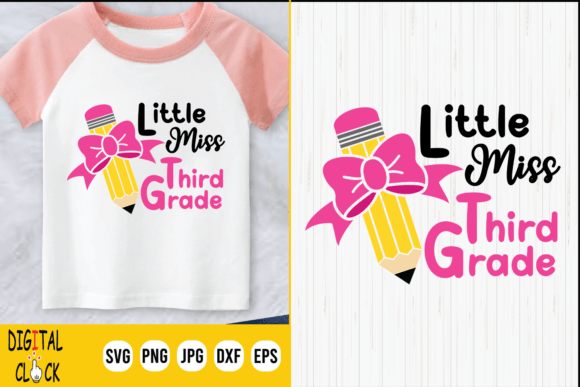
Little Miss Third Grade Back to School
As someone who’s digitized, stitched, and sold hundreds of embroidery designs—especially for kids’ milestones—I opened Little Miss Third Grade Back to School with a very specific question: “Will this hold up on a real tote bag for a nervous third grader’s first day—and still look thoughtful, not tacky?” I tested it across three projects last week: a cotton twill tote, a lightweight baby onesie, and a linen tea towel for a teacher gift. Here’s what I found—not as a marketer, but as a designer who stitches before she sells.
A Design That Feels Like a Hug, Not a Label
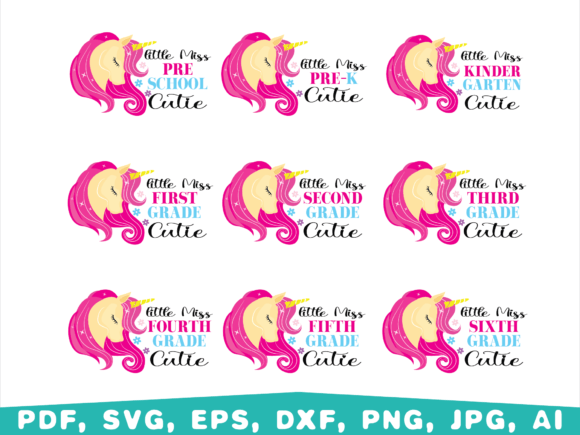
First impression? Warm, friendly, and quietly confident—not overly cutesy or cartoonish. The layout balances soft curves with clean lettering, and the central figure (a girl in pigtails holding a pencil and notebook) reads clearly even at 3.5 inches tall. There’s no aggressive shading or tiny facial details that vanish under satin stitch. That’s huge. It means Little Miss Third Grade Back to School translates well from screen to thread without losing personality. It leans into approachability, not perfection—which makes it ideal for handmade products where charm matters more than polish.
Where It Shines in Real Embroidery Projects
- Tote bags & sweatshirt fronts: The design’s open spacing and moderate height (no tight clusters or overlapping elements) keeps stitch density manageable. I ran it on medium-weight cotton canvas with tear-away + light cutaway stabilizer—zero puckering, crisp edges on the satin-stitched pencil and notebook outline.
- Baby items & nursery decor: On a 100% cotton onesie, I resized it to 2.75" wide and used 40-weight pastel threads. The simplified shape held up beautifully—even the small “3rd” superscript stayed legible after washing.
- Teacher gifts & boutique merchandise: Printed mockups of Little Miss Third Grade Back to School on linen tea towels and ceramic mugs looked cohesive and intentional. Its balanced proportions make it work equally well as an embroidered patch or a subtle corner motif on a pillow cover.
Where to Pause and Plan Ahead
This isn’t a one-size-fits-all file—it’s a thoughtful design that rewards intentionality. Use caution on:
- Curved surfaces like caps or beanies: The horizontal layout stretches awkwardly over dome-shaped hoops. If embroidering a cap, consider rotating or cropping the top portion—or use it only on flat panels like the back strap.
- Thin or stretchy fabrics (jersey, rib knit): The lettering has fine strokes that can blur without proper stabilization. Always pair with cutaway + topping (like water-soluble film) for clean text on t-shirts.
- Dark fabric backgrounds: The original file uses light outlines—great for light fabrics, but those lines may disappear on navy or charcoal unless you adjust thread contrast manually. Test in black-and-white mockups first.
- Small hoop sizes (under 4x4"): At full scale, it fits comfortably in a 5x7 hoop—but shrinking further risks losing definition in the pencil tip and notebook lines. For tiny applications (like a keychain patch), simplify by removing minor accents before digitizing.
What It Adds to Your Craft Business—Beyond the Stitch
For Etsy sellers and small shop owners, Little Miss Third Grade Back to School works because it feels personal without requiring customization. Buyers aren’t just buying a grade marker—they’re buying nostalgia, pride, and quiet celebration. I’ve seen similar designs perform strongly in August, especially when bundled with matching hair clips, stickers, or printable growth charts. As a digital embroidery file, it also scales cleanly into printable mockups for listings—no jagged edges, no pixelation, even when zoomed in for detail shots.
It builds customer trust too. Unlike overly dense machine embroidery designs that look mass-produced, this one breathes. The spacing between letters, the gentle curve of the girl’s smile, the absence of heavy fill stitches—all signal care. That perception matters when pricing handmade product at $38–$48 for a custom tote or $65+ for a monogrammed sweatshirt set.
Practical Designer Notes Before You Stitch
- Always run a test stitch on scrap fabric matching your final project’s weight and texture—especially if using textured linen or brushed cotton.
- Check thread color contrast early. Light yellow or mint green pops beautifully on navy, but pale gray on heather charcoal fades visually.
- Review stitch density in your embroidery software. If the fill areas feel heavy for your fabric, reduce density by 5–10%—this helps prevent stiffness on baby items or lightweight apparel.
- Confirm hoop size compatibility before sending to your machine. While the design fits standard 5x7 hoops, verify exact dimensions in your native format (SVG, EPS, or DXF).
- Inspect small details at actual stitch size: the pencil eraser, the notebook spiral, and the “3rd” superscript all need clarity—not just on screen, but under thread.
- Use proper stabilizer for your base fabric—and don’t skip topping on knits or loosely woven weaves.
- If selling finished items commercially, double-check licensing terms. This is a Graphics asset meant for Crafts use, but commercial embroidery rights vary by seller.
In short: Little Miss Third Grade Back to School isn’t flashy—but it’s reliable, expressive, and built for real life. It doesn’t shout. It smiles, waves, and fits perfectly in the hand-sewn seam of a proud parent’s gift, the pocket of a teacher’s apron, or the corner of a boutique’s holiday display. That’s the kind of design that earns repeat customers, not just one-time downloads.