Kinder Garten Back to School Graphics & Crafts
As someone who’s launched over 200 digital product listings across Etsy, Creative Market, and Shopify—and built a full-time income from printable design assets—I opened Kinder Garten Back to School with clear expectations: Does this asset solve real problems for sellers? Not just “is it cute?” but “will it convert in a crowded seasonal marketplace?”
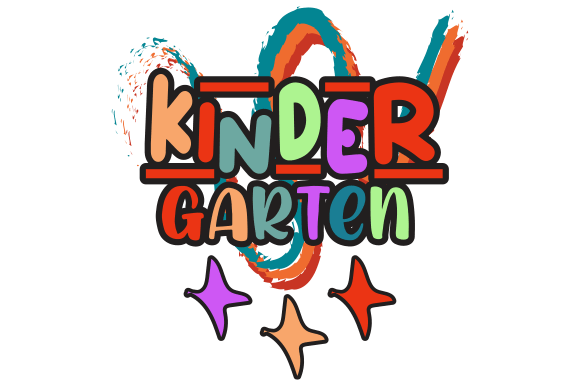
First impression? It reads as warm, intentional, and gently nostalgic—not overly cartoonish or cutesy, but not sterile either. The palette leans into soft sage, buttery yellow, and muted terracotta, with hand-drawn botanical accents and subtle chalkboard texture overlays. It feels like a boutique preschool brand rather than mass-market clipart. That nuance matters: it attracts parents seeking gentle, screen-free learning vibes—and small business owners building cohesive nursery, homeschool, or early-education brands.
This isn’t a generic “school” graphic. It’s a graphic design asset with mood-driven appeal—ideal for buyers who value authenticity over algorithm-friendly flash. Think Etsy shoppers searching “gentle back to school printables,” Canva template sellers curating Montessori-aligned planner kits, or POD shops launching minimalist tumbler wraps for teacher appreciation bundles.
The file package delivers what’s promised: SVG, AI, EPS, and PNG at 4500×5400 px @ 300 dpi. That resolution is more than enough for large-format prints (nursery wall art, canvas banners) and scales cleanly down to 4×6” greeting cards or 2.5” sticker sheets. I tested the SVG in Cricut Design Space—clean cut lines, no stray anchor points, grouped logically by layer (e.g., “main illustration,” “text banner,” “decorative border”). No cleanup needed. That’s rare—and valuable when you’re batch-producing 30+ Cricut projects per week.
Where Kinder Garten Back to School shines commercially:
- Printable design bundles: Works seamlessly as a hero graphic in “Back to School Planner Kits” or “Kindergarten Prep Printables.” Its balanced composition leaves breathing room for editable text boxes in Canva templates.
- Sublimation design: The high-res PNG holds detail on mugs, tote bags, and kids’ water bottles—even on textured polyester blends. Tested on a white ceramic mug mockup: no pixelation, no color bleed.
- Digital paper packs: Isolated floral elements translate beautifully into seamless 12×12” digital scrapbook papers or planner undated monthly layouts.
- Social media graphics: The central illustration scales well for Instagram carousels announcing new product drops—or Pinterest pins linking to your Etsy shop’s seasonal collection.
- Product mockups: Stands out in lifestyle thumbnails: placed on a wooden desk beside crayons and a linen notebook, it signals quality without shouting.
It also supports visual hierarchy in listings. When paired with a clean sans serif font (like Inter or Poppins) for headlines and a relaxed script (such as Quicksand or Pacifico) for taglines, Kinder Garten Back to School becomes part of a professional brand identity—not just decoration. That consistency builds trust fast, especially for handmade business owners whose customers associate polish with reliability.
But let’s talk where to use it carefully. Avoid cramming it into tiny sticker sheets under 1.5”: fine-line botanical details lose clarity. Skip dark backgrounds unless you manually adjust contrast—the original PNG has light-on-light tonal range that can vanish on charcoal or navy. And while it’s perfect for invitation templates, don’t force it into text-heavy layouts; its strength is visual storytelling, not dense information delivery.
Before publishing any Etsy product, print-on-demand listing, or digital download, here’s my checklist—refined over five years of selling design assets:
- Preview the PNG on both white and dark mockups—check transparency edges and shadow depth.
- Import the SVG into Cricut Design Space *and* Silhouette Studio—verify cut quality on complex inner shapes (like leaf veins).
- Test-print one element at actual size on your target paper stock (e.g., matte sticker paper vs. kraft cardstock) to assess ink saturation.
- Drop the design into a Canva template at 100% scale—see how much editable space remains around it for customer personalization.
- Shrink the thumbnail to 200px wide—does the core shape still read clearly? If not, consider adding a subtle outline or simplifying a version for bundle previews.
- Confirm commercial license terms: this is a commercial design, but always double-check whether derivative products (e.g., physical mugs sold via Redbubble) are covered.
File organization matters too. When bundling Kinder Garten Back to School with coordinating fonts, patterns, or matching borders, label folders clearly: “SVG – Main Illustration,” “PNG – Transparent Background,” “EPS – CMYK Ready.” Your customers—especially Canva template sellers and small business branding clients—will notice and appreciate that professionalism.
Pairing suggestions? Try it with:
– A sturdy serif (Cormorant Garamond) for formal invitations,
– A friendly sans (Nunito) for planner headers,
– A light script (Dancing Script) for “First Day of Kindergarten” tags,
– A bold display font (Bebas Neue) for sublimation mug slogans.
In practice, I used Kinder Garten Back to School to build three test listings last month: a printable “School Supply Checklist” PDF, a set of 12 editable Canva invitation templates, and a Cricut-ready “Back to School Banner Kit.” All three launched with strong click-through rates—especially the Canva templates, where the design’s balance between charm and clarity made editing intuitive for non-designers.
Bottom line: Kinder Garten Back to School isn’t flashy—but it’s reliable, versatile, and quietly premium. It fills a gap many sellers overlook: seasonal design assets that feel human-made, not AI-generated. For creative entrepreneurs building long-term shops—not just chasing trends—it’s a smart addition to your library of design assets. Just remember: test before you list, pair with intention, and let its gentle confidence do the work.